You are not stuck.
You're Just Ready for a Different Conversation.
The leaders who work with us are already successful. They have outgrown the advice, the frameworks, and the people around them who keep telling them what to do.
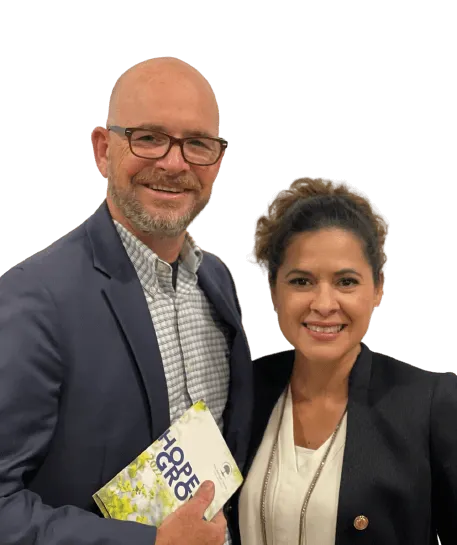
Jamie and Ruthie Pérez Slingerland are both Master Certified Coaches, a credential held by fewer than 2% of coaches worldwide. They do not bring a methodology. They bring complete attention.
How We Work
What We Do

Executive & Leadership Coaching
You already know how to perform. This is about how you lead when the stakes are high and the answers aren't obvious. We work with executives and leaders to sharpen how they think, decide, and show up — in the room, in their relationships, and in the moments that define their legacy. The result isn't just better leadership. It's a clearer, more grounded version of you.

Corporate Coaching
We partner with organizations to support the development of senior leaders and high-potential talent.
Our coaching focuses on how leaders think, communicate, and make decisions in real business environments. This is not theoretical development. It is applied, real-time work grounded in the challenges leaders are already facing.
Leaders become more clear, more direct, and more effective in high-stakes conversations and decisions.
The result is stronger leadership performance where it matters most.
About Us
Jamie Slingerland, MCC & Ruthie Perez Slingerland, MCC
Jamie & Ruthie co-founded Freedom Life Journey, LLC. They work with leaders who are done with surface level change. In the last 15 years, they have logged over 12,000+ hours of coaching and served more than 1200 leaders
"If you are a leader who thinks you already know what you need, work with Jamie and Ruthie anyway. You will quickly discover there is a conversation you have been missing.."
Ken Davis - Best selling author of Secrets of Dynamic Communication
Why This Works
Coaching is not consulting. Here is the difference.
.A consultant brings answers. A mentor shares experience. An advisor tells you what they would do.
A coach does none of those things.
Coaching at the MCC level is a different kind of conversation entirely. It is rigorous, honest, and completely focused on you. Not on a framework. Not on what worked for someone else. On what is actually true for you right now and what becomes possible when you think more clearly about it.
The leaders who get the most from this work are the ones who are already good at what they do. They are not here because something is broken. They are here because they want to think at a higher level than their current environment allows.
That is what we do.
Success Stories
What People Are Saying


































© 2026 Freedom Life Journey LLC | All Rights Reserved.