Lessons We'll Carry: Leadership Reflections from a Rare Gathering
Leadership, Executive Coaching
Lessons We'll Carry: Leadership Reflections from a Rare Gathering
By Jamie Slingerland, MCC & Ruthie Pérez Slingerland, MCC · Freedom Life Journey | Executive & Leadership Coaching | Franklin, TN | June 2026 · 7 min read
Some days stay with you.
Yesterday was one of them.
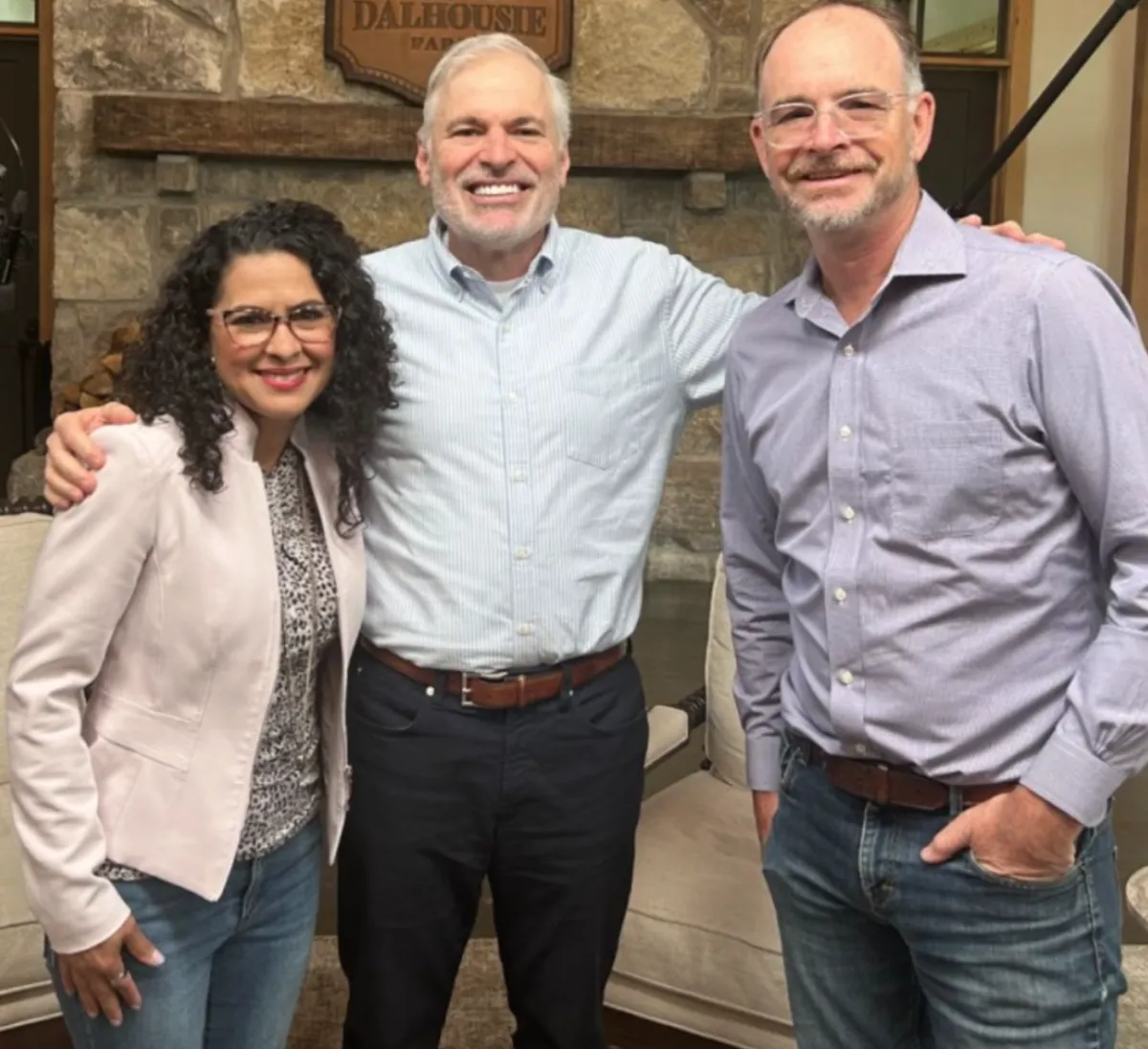
Ruthie and I had the opportunity to spend time with two men who have shaped the way we think about leadership, coaching, and life in more ways than we could easily count — Patrick Lencioni and John C. Maxwell — at a small gathering hosted in Dave Ramsey's barn just outside of Franklin.
The setting was unpretentious in the best way. Wooden beams. Natural light. A room small enough that when someone spoke, you could see their face clearly. There were no slides. No stage. Just a handful of people sitting with two men who have spent their lives thinking carefully about what it means to lead well — and who clearly still find the question worth asking.
We have been learning from both of them for more than twenty years. Their books, frameworks, and ideas have lived in our coaching conversations, in the way we approach our clients, and honestly in how we try to show up for each other. Sitting across the room from the people whose work helped form your professional philosophy is a strange and grounding experience. Surreal in the best way.
We were also delighted to learn that Patrick recently relocated to Franklin. Having someone with his caliber of wisdom, humility, and heart as a neighbor — in a town we love and have built our practice in — felt like an unexpected gift to this community.
We left with full notebooks and full hearts. But more than any specific insight, we left reminded of something we see in our coaching work every single day: the leaders who change the people around them are the ones who are still willing to be changed themselves.
Here are the four things that stayed with us most clearly.
SECTION 1: The healthiest leaders are willing to be real
Patrick spoke about the role of vulnerability in effective leadership — not vulnerability as a performance or a strategy, but as a natural byproduct of a leader who is actually secure. Leaders who are emotionally honest, who can name what they do not know and acknowledge where they have fallen short, create trust in a way that polished, composed, always-on leaders simply cannot.
The leaders people follow most deeply are not the ones who appear the most invulnerable. They are the ones who are the most human.
What struck us was how he said it. Not as a principle to adopt, but as something he had learned the hard way — something that cost him before it served him. That honesty about the learning curve gave the idea a weight it would not have had otherwise.
We see this constantly in our executive coaching work in Franklin and Nashville. The leaders who make the biggest leaps are almost never the ones who need the most skill. They are the ones who are willing to look honestly at what is actually happening — in their teams, in their relationships, and in themselves. That willingness is the opening through which everything else moves.
The leaders people follow most deeply are not the ones who appear the most invulnerable. They are the ones who are the most human.
SECTION 2: People follow clarity more than charisma
John's message was, in some ways, the most practically transferable of the day. Sustainable leadership, he emphasized, is not built on personality or presence. It is built on clarity — clear values, clear communication, clear expectations, and a clear sense of where you are going and why it matters.
Charisma can fill a room. Clarity builds a team.
In our coaching practice, clarity is often the turning point. We work with leaders who are genuinely gifted — smart, driven, well-intentioned — who are nonetheless creating confusion around them without realizing it. When those leaders gain clarity about what they actually believe, what they are genuinely asking of their people, and where they are truly trying to go, something shifts. Not just in their performance, but in the people around them.
Clarity is not just a communication skill. It is a leadership act. And it is one that can be developed — which is, in large part, what coaching exists to do.
SECTION 3: The best leaders multiply, not just grow
Both Patrick and John returned, in different ways, to a vision of leadership as stewardship rather than status. The question they kept pointing toward was not how do I become a better leader? but how do I become someone who develops better leaders?
That shift — from growth to multiplication — is one of the most consequential moves a leader can make. And it rarely happens automatically.
Leaders who stay oriented toward their own advancement tend to accumulate: skill, influence, results, recognition. All of those things matter. But leaders who orient themselves toward the development of the people around them do something structurally different. They build organizations that outlast them. They create cultures where people grow without being pushed. The people they invest in go on to invest in others. The impact compounds in ways that no individual achievement, however significant, ever could.
In our experience coaching executives in the Nashville and Franklin area, this is often where the most meaningful work happens — not in sharpening a leader's own performance, but in helping them see and take seriously their role in shaping the leaders forming around them. That is a different question than most leadership development asks. It is also a more important one.
SECTION 4: Spiritual maturity is the foundation of lasting leadership
This one was not spoken as a formal point. It was more of a current running beneath the whole day — present in the way both men talked about their lives, their failures, their sources of steadiness, and the things they wish they had understood earlier.
At one point, someone in the room asked what they would tell their younger selves. Both answers, in different words, pointed toward the same thing: slow down enough to be formed, not just informed. The leaders who endure are not simply the ones who learned the most. They are the ones who were changed the most — at the level of character, not just capability.
The best leaders we have known are not simply skilled. They are formed.
Our own work as coaches is grounded in our values and our faith. We have been at this long enough to know that the wisdom we hope to offer others cannot come from technique alone. It has to come from a life — from the kind of slow, unglamorous formation that happens through humility, reflection, and abiding in something larger than your own ambitions over time.
The best leaders we have known are not simply skilled. They are formed. That formation is what gives leadership its staying power. And it is something no credential, no promotion, and no calendar achievement can manufacture.
SECTION: What We're Carrying Forward
Walking out of that barn in Franklin, Ruthie and I were quieter than usual. Not from exhaustion, but from the particular kind of fullness that comes when something important has been named out loud by people who have actually lived it.
It is rare to encounter leaders whose lives align this clearly with their message. Both Patrick and John carry what they teach. You can feel the absence of performance when that is true — and the presence of something more substantial in its place.
We were reminded why we love this work.
Coaching is not primarily about helping leaders improve their performance — though that happens, and it matters. It is about helping leaders grow in depth, purpose, and character. It is about creating the conditions in which a person can finally think clearly enough about their own life to lead it with intention.
That is a longer game than a quarterly initiative. It is also the only game worth playing.
SECTION: One More Thing
If any of what Patrick and John described resonates with where you are right now as a leader — if you find yourself wanting the kind of clarity, depth, and honest conversation that yesterday's gathering pointed toward — that is exactly the work we do.
Not through a program. Not through a framework. Through a real, substantive coaching relationship with someone who will pay complete attention to you and ask the questions that actually matter.
Jamie and Ruthie Slingerland are both Master Certified Coaches (MCC), a credential held by fewer than 2% of coaches worldwide. Together, they have logged more than 12,000 coaching hours with executives and senior leaders across a wide range of industries — right here in the Franklin and Nashville area, and beyond.
If you are ready for a different kind of conversation, we would love to have it.
Schedule a Discovery Call with Jamie →
Schedule a Discovery Call with Ruthie →
