
Not My Circus, Not My Monkeys: 3 Shifts for Healthier Boundaries
Letting go is hard—especially if you’re a natural nurturer. But carrying everyone else’s stress isn’t just exhausting; it’s unsustainable. Over...
Read More →

ICF Core Competency #7: Evokes Awareness Lightbulb Moment
Lightbulb Moment is part of a series of songs we wrote inspired by the ICF Core Competencies. Over time,...
Read More →

Knowledge vs Wisdom in Leadership: Lessons from a 10-Year Mastermind
Knowledge is easy to come by these days. You can listen to a podcast, scroll social media, read a book,...
Read More →

When Coaching Finally Became Lighter
For the first five years I was coaching, I kept wondering if I could actually keep doing this. Not because...
Read More →

Presence Speaks Louder Than Words: 3 Practices for Coaching Mastery
One of the biggest shifts on the path to coaching mastery is learning that less is more. When we’re fully...
Read More →

Stop Being Your Own Worst Critic: Imposter Syndrome
Theodore Roosevelt is often remembered not just as a president, but as someone who deeply valued action, effort, and...
Read More →

ICF Core Competency #6: Listens Actively : Between the words
Listening Between the Words ICF Core Competency #6: Listens Actively For a long time, I thought good listening meant catching...
Read More →

ICF Core Competency #5: Maintains Presence
Presence Is the Quiet Skill That Changes Everything in your Coaching! . We wrote this series of...
Read More →

Great Leaders Learn to Bounce Back
In 1906, the Chicago Cubs had the best regular season in baseball history.They won 116 games. Lost only 36. Then...
Read More →

3 ways to coach better (By doing less)
Coaching really comes down to one thing: being fully present with your client. A lot of coaches try to get...
Read More →

Lessons We’ll Carry: Leadership Reflections from a Rare Gathering
Yesterday was one of those rare, meaningful moments that Ruthie and I will carry with us for a long time....
Read More →

Interview Confidence Isn’t About Having the Right Answers
3 Ways to Bring Confidence Into Your Next Job Interview This morning I wrapped up a coaching call with a...
Read More →

ICF Core Competency # 4: Cultivating Trust and Safety in Coaching
Safe to Be: Why Trust and Safety Change Everything in Coaching We created this series of eight songs because the...
Read More →

Coaching Presence: Why Taking Fewer Notes Improves Your Sessions
Why I’ve Started Taking Way Fewer Notes (and Why It’s Changed Everything) Like most coaches, I used to take a...
Read More →

ICF Core Competency #2 Embodies a Coaching Mindset
By Jamie Slingerland, MCC & Ruthie Slingerland, MCC Lately, Ruthie and I have been looking for ways to move the...
Read More →
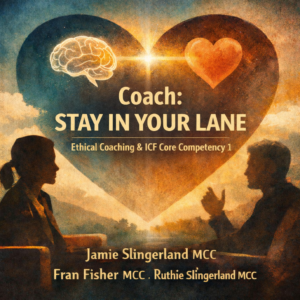
ICF Core Competency #1 Demonstrates Ethical Practice: Coach stay in your lane:
Ethics is a Relationship: Embodying ICF Core Competency #1 By Jamie Slingerland, MCC & Ruthie Slingerland,...
Read More →

ICF Core Competency #3 No Agreement No Coaching
We see this all the time in mentor coaching:smart coaches, good questions, real care—and still something feels off. More often...
Read More →

The Mindset That Derails Feedback, and How Great Leaders Shift It
Over the last 10 years of coaching leaders, I’ve noticed a recurring pattern when it comes to giving effective feedback....
Read More →